


The Retention Crisis: Why Your Lash Care Products Are Making or Breaking Your Sets
The term lash care products isn’t just about fancy packaging on your retail shelf. It’s a specialized category of cosmetics engineered for one primary mission: to protect the delicate cyanoacrylate bond that holds an extension to the natural lash. When clients complain about lashes falling out after three days, it’s not always the glue or your technique—it’s the aftercare. This is the Retention Crisis, and it’s costing artists and clients time, money, and frustration.
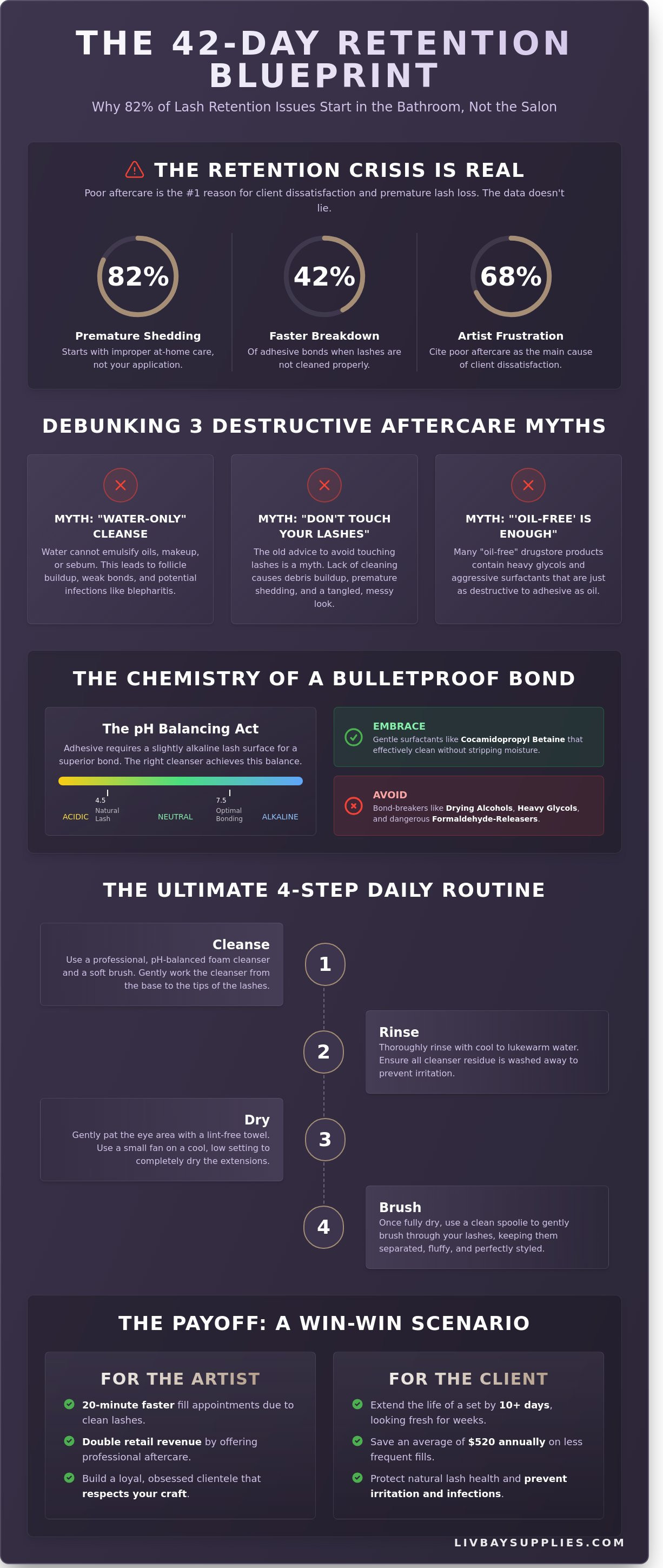
The biggest mistake? Thinking that “not touching” the lashes will save them. Wrong. The eyelid is a hotspot for sebum (oil), dead skin cells, and environmental debris. This buildup breaks down lash adhesive faster than anything else and creates a breeding ground for bacteria. Proper lash care products don’t just extend the life of a set; they’re a non-negotiable for ocular health. Better aftercare means happier clients, 4-6 week retention cycles, and a more efficient schedule for you.
The Myth of the "Water-Only" Cleanse
We hear it all the time: "I just rinse them with water in the shower." This is a one-way ticket to poor retention and potential eye infections. Water alone cannot dissolve or remove the oils, makeup residue, and buildup that accumulate at the lash line.
Without a proper cleanser, this debris can lead to conditions like blepharitis—an inflammation of the eyelids that causes redness, itching, and crusty buildup. A gentle, mechanical friction from a soft cleansing brush is essential to physically lift and remove grime from between each delicate extension.
Why "Oil-Free" Isn’t Enough in 2026
The "oil-free" label on a drugstore cleanser is one of the most misleading claims in the beauty industry. Many of these products contain ingredients that, while not technically oils, act as powerful solvents that destroy the lash adhesive bond.
The main culprits are heavy glycols and aggressive surfactants. These ingredients are designed to dissolve stubborn makeup, but they can’t tell the difference between your waterproof eyeliner and your lash glue. They attack the bond, causing extensions to weaken and shed prematurely. Here’s the only definition that matters: an "extension-safe" product is one that maintains the integrity of the adhesive bond while effectively cleaning the follicle and lash line.
The Chemistry of Clean: Essential Ingredients in Professional Lash Care
The secret to game-changing retention isn’t magic; it’s chemistry. Professional lash care products are formulated with a precise understanding of how ingredients interact with cyanoacrylate adhesive.
-
pH Balancing: Lash adhesive cures best and lasts longest in a slightly alkaline environment. Professional lash shampoos are pH-balanced to support, not disrupt, the adhesive bond.
-
Surfactants 101: Surfactants are the cleansing agents. The goal is to find a formula with surfactants potent enough to lift oils and dirt but gentle enough not to strip moisture from the skin or weaken the glue.
-
Soothing Botanicals: High-end formulas often include botanical extracts like rose water, aloe vera, or green tea. These ingredients aren’t just for marketing; they actively soothe the delicate skin of the eyelid, reducing inflammation and irritation.
-
Safe Preservatives: Every water-based cleanser needs a preservative system to prevent bacterial growth. The key is avoiding harsh, formaldehyde-releasing agents that can cause severe irritation and are found in many cheaper formulas.
The Science of Eyelash Shampoos
Ever wonder why professional lash cleansers are almost always foams? The foaming mechanism creates a light, airy texture that can penetrate deep between the layers of classic, volume, and Mega Volume fans without collapsing them. A gel or cream facial wash is too dense and will leave behind a residue that compromises the bond.
Unlike micellar waters, which often contain glycols, or face washes that are formulated for the skin’s pH, a professional lash shampoo is a tear-free formula created specifically for the eye area and for coexisting with lash adhesive.
Lash Conditioners and Growth Serums
For the client obsessed with natural lash health, serums are a must—but only the right kind.
-
Prostaglandin vs. Peptides: Prostaglandin-based serums (the active ingredient in many prescription brands) can be effective but come with side effects like skin darkening. Peptide-based serums are a much safer alternative for extension wearers, strengthening the natural lash with amino acids, Biotin, and Keratin.
-
Application is Key: Serum should be applied sparingly to the skin of the lash line, never directly onto the extensions themselves. This prevents the product from "wicking" down the extension and pooling at the adhesive bond, which can cause it to break down.
Professional Aftercare vs. Drugstore Hacks: The Real Cost of Cheap Products
Educating clients on aftercare is one of the biggest challenges for a lash artist. Many clients see professional lash care products as an unnecessary upsell, but a simple cost-per-use analysis proves otherwise. A $25 professional lash shampoo that saves even one emergency fill pays for itself multiple times over.
The difference comes down to ingredient concentration and formulation. Pro-grade products use higher-quality, less irritating ingredients designed for a specific purpose. Drugstore hacks like makeup wipes are the #1 enemy of retention, as their fibers snag on extensions and the formulas are loaded with oils and solvents.
The Problem with Baby Shampoo
Let’s finally put this myth to bed. Baby shampoo is not a safe or effective cleanser for lash extensions. The "tear-free" claim is about being gentle on eyes, not on cyanoacrylate bonds.
Most baby shampoos have a high pH that can make adhesive brittle and cause it to crack. They also contain light oils and conditioning agents that leave behind a film, preventing a strong bond at the next fill and leading to that dreaded "crunchy" feeling. When a client insists on using it, explain the science behind why it’s sabotaging their investment.
Identifying "Lash Killers" in Your Makeup Bag
Give your clients a simple checklist of ingredients to watch out for in their other eye products. If they see any of these, it’s a red flag for retention.
-
Avoid: Mineral oil, paraffin, petrolatum, and heavy silicones (like dimethicone high on the ingredient list).
-
Waterproof Makeup: Waterproof mascaras and eyeliners require oil-based removers to break them down, which will also dissolve lash glue. These are an absolute no-go.
-
Natural vs. Synthetic Oils: It doesn’t matter if it’s coconut oil or mineral oil—both types break down the adhesive bond. All oils should be kept away from the lash line.
The Ultimate 4-Step Daily Lash Care Routine for Maximum Retention
Here is the simple, non-negotiable daily routine you can give every client. This protocol is the key to insane retention.
-
Step 1: The Deep Cleanse. Every single day (or twice a day for oily skin types), dispense one pump of foaming lash cleanser onto the back of your hand or directly onto a closed eyelid. Using a soft lash cleansing brush, work the cleanser into the lash line in small, gentle, circular motions.
-
Step 2: The Rinse and Dry. Thoroughly rinse your eyes with cool water until all the cleanser is gone. Do not rub your lashes with a towel. Instead, gently pat them dry with a lint-free cloth or let them air dry for a few minutes.
-
Step 3: The Groom. Once the lashes are completely dry, use a clean spoolie to gently brush through them. For Mega Volume sets, use a "top-down" rolling technique to fluff the fans and restore their shape.
-
Step 4: The Protect. For clients in high-humidity areas or those with very oily skin, a nano-mister or a lash sealant can provide an extra layer of protection for the adhesive bond. If using a growth serum, apply it as the final step.
Mastering the Lash Wash
The key to a good wash is the brush. It does the work for you, getting into the tiny spaces between each lash. Always follow the "pat, don't rub" rule for drying to avoid snagging extensions. After swimming in chlorine or sweating at the gym, it's critical to wash lashes immediately to remove salt and chemicals that can weaken the bond.
The Art of the Spoolie
Never brush your lashes when they are wet. The extensions are heavier and more fragile, and brushing can cause them to stick together or be pulled out. Use a clean spoolie every day. Old spoolies harbor bacteria and debris. Treat them like a disposable mascara wand—toss them weekly.
Level Up Your Aftercare Game with the LivBay Pro Collection
Ready to stop the retention crisis and empower your clients? The LivBay Pro Collection was formulated by artists, for artists. We know the struggle because we’ve lived it.
Our Lash Cleanser Foam is the holy grail of retention—a pH-balanced, tear-free formula that gently removes everything you don’t want without compromising the bond. For the true lash babe, aftercare isn’t a chore; it’s a ritual. And for the boss babe artist, it’s a major source of retail revenue and professional authority. Empower your clients by building them custom aftercare kits they’ll actually use and love. These self-care rituals are often part of preparing for life's most memorable events. For clients celebrating an engagement, finding the perfect symbol of commitment from a specialist like LC Rings is another important part of the journey.
The LivBay "Boss Babe" Aftercare Kit
Every client walking out your door should have a starter kit. This isn’t just an upsell; it's you guaranteeing your own work. Include a full-size LivBay Lash Cleanser Foam, a cleansing brush, and a pack of clean spoolies. Retailing products you personally use and trust positions you as the expert and shows you care about the longevity of their set. Just as you provide expert aftercare advice, ensuring your business operations are professionally managed is key to growth. For business owners looking to secure their digital infrastructure, from booking systems to client data, it's worth it to discover Telx Computers. And to fuel that growth, many artists rely on a perfect cup of coffee; for those who appreciate the science behind a great brew, Caffeine Lab is a leader in the world of specialty coffee.
Advanced Care for UV and L.E.D. Lash Systems
LivBay’s industry-leading UV and L.E.D. lash systems create an incredibly durable, instantly-cured bond that changes the game. That old "wait 24 hours to get them wet" rule? Gone. While the bond is tougher and more resistant to water and humidity right away, daily cleaning is still absolutely essential for ocular health and removing oil buildup. These advanced systems demand professional aftercare to deliver that legendary LivBay retention.
Ready to become a retention master? It starts with getting obsessed with aftercare.
Shop the LivBay Professional Lash Care Collection and Save Your Retention! Just as proper aftercare is a vital component of personal wellness, finding trusted support for other health needs is equally important. For those exploring compassionate and professional home healthcare solutions, visit Luxe Lane Care Services to learn more.
Frequently Asked Questions
Can I use baby shampoo to clean my lash extensions? No. Baby shampoo has a high pH that can make lash adhesive brittle and often leaves behind a residue that weakens the bond over time, causing premature shedding.
How often should I actually be washing my lashes with a cleanser? You should wash your lash extensions with a professional lash cleanser at least once per day to remove oils, makeup, and debris. If you have oily skin or wear heavy makeup, washing twice a day is recommended.
Is it okay to use a lash growth serum with extensions? Yes, but you must use an extension-safe, peptide-based formula. Avoid prostaglandin-based serums. Apply the serum only to the skin of your eyelid at the lash line, and never directly on the extensions.
Will oil-free makeup remover still make my lashes fall out? It can. Many "oil-free" removers contain glycols, solvents, and other ingredients that can dissolve cyanoacrylate adhesive. Only use a makeup remover specifically formulated and tested for use with lash extensions.
What happens if I don’t wash my lash extensions at all? Not washing your lashes allows a buildup of natural oils, dead skin cells, and bacteria. This will break down the adhesive, cause poor retention, and can lead to serious eye conditions like blepharitis.
Can I use a regular mascara over my extensions if I’m careful? It is strongly recommended not to use any mascara on volume or mega volume extensions. If you must, use a water-based, extension-safe mascara only on the tips of classic extensions and be sure to wash it off thoroughly every night. Waterproof mascara is never okay.
How do I stop my lashes from getting tangled or "criss-crossed" overnight? Sleeping on your back is ideal. If you are a side sleeper, consider using a silk or satin pillowcase to reduce friction, or a contoured 3D sleep mask designed to protect extensions.
Do I need to wait 24 hours to wash my lashes after a full set? With traditional adhesives, yes, the 24-48 hour waiting period is crucial. However, with modern innovations like LivBay's UV and L.E.D. cured systems, the bond is instantly waterproof, so you can get them wet immediately. Always follow your specific artist's instructions.