


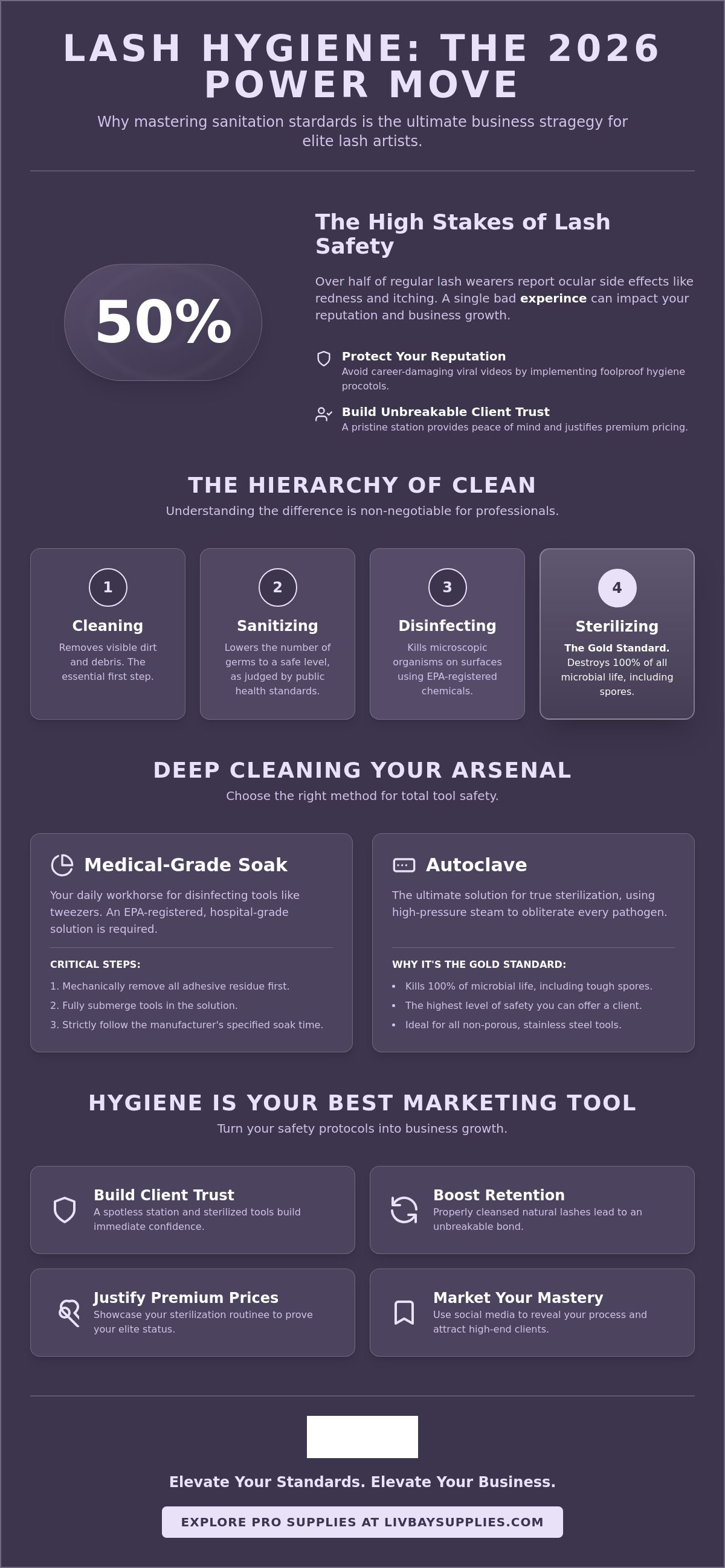
Did you know that over 50% of regular lash wearers report ocular side effects like redness or itching? That's a massive portion of your potential market feeling hesitant. You know that keeping your station spotless isn't just about passing an inspection. It's about protecting your art and your business. Mastering the best practices for lash extension hygiene is what separates the elite artists from the hobbyists who cut corners. It's time to stop guessing and start leading with total confidence in your sanitation stardards.
You've likely felt the pressure of keeping up with the new 2026 regulations, especially with the Maryland Board of Cosmetologists pushing for stricter licensing and tool procotols. We promise to give you the blueprint for a foolproof routine that keeps your clients safe and your retention rates soaring. This guide breaks down the latest FDA-registered LED tech, the right way to use a lash clenser, and how to use hygiene to justify premium prices. We're cutting through the noise to ensure your brand reputationn is bulletproof. You'll learn how to avoid a bad experince for your clients and why your prep technique is the secret weapon for 2026 success.
Key Takeaways
- Learn why a spotless station is the ultimate business stragegy and "invisible differentiator" for elite artists.
- Level up by mastering the best practices for lash extension hygiene and the vital difference betwen sanitizing and sterilizing.
- See how UV and L.E.D. systems create a cleaner environment by cutting down on adhesive curing time.
- Get a "Pre-Flight Check" checklist for handeling everything from your morning setup to mid-service accidents.
- Use social media to reveal your sterilization routinee and show why your high-end brand justifys its elite status.
Why Hygiene is the Ultimate Power Move for Lash Artists in 2026
Hygiene isn't just a chore. It's the flex that defines your brand in 2026. If you're treating sanitation like an afterthought, you're leaving money on the table. In this industry, your best practices for lash extension hygiene are the backbone of every full set eyelash extensions application. It's a multi-layered hustle involving your workspace, your tools, and your client prep. When a high-end client walks in, they're looking for signs of mastery. A pristine station builds an imediate sense of psychological trust. They aren't just paying for lashes; they're paying for the peace of mind that comes with a clean environment.
One viral video about a swollen eye can end your career. Period. The internet doesn't forget. Understanding infectious disease risks in salons is about more than just avoiding a lawsuit. It's about protecting your reputacion and the community you've built. Elite artists know that a single slip-up can destroy years of hard work. Positioning yourself as a hygiene authority isn't just safe; it's a marketing strategy that justifies your premium rates.
The Science of Cross-Contamination
Bacteria and Demodex mites are the silent enemies. They thrive where artists get lazy. Think about your "hot zones." Your lash tile, your tweezer tips, and even the adhesive nozzle are prime spots for contaminacion. You need to know the difference between a simple chemical irritation and a full-blown infection. Irritation might fade, but an infection can cause permanent damage. Keep your workspace medical-grade to keep these microscopic threats at bay. It's about being proactive, not reactive.
Hygiene as a Retention Secret
Stop blaming your adhesive for poor retention. If the natural lash is covered in oils, makeup residue, or skin cells, even the best eyelash glue won't save you. Deep cleaning isn't a separate step. It's the literal first phase of the bonding process. You need a high-quality lash clenser to strip away the junk before you even think about picking up your tweezers.
When you master these best practices for lash extension hygiene, you aren't just being "safe." You're ensuring that the bond is unbreakable. That's how you get that insane retention that keeps your books full for months. This is the proffessional standard that separates the leaders from the followers. Clean lashes are happy lashes, and happy lashes mean a thriving business.
Deep Cleaning Your Arsenal: Sanitization vs. Sterilization
You can't just wing it with a quick wipe and call it a day. That's a "bedroom lasher" move, and you're building an empire. Understanding the hierarchy of clean is a non-negotiable stratergy for any pro. Cleaning is just removing visible dirt. Sanitizing lowers the germ count. Disinfecting kills the nasties. Sterilizing? That’s total destruction of all microbial life. In 2026, the elite standard is hospital-grade, EPA-registered solutions. These aren't just suggestions; they're the foundation of best practices for lash extension hygiene. Anything less is a gamble with your client's safety. You're an artist, but your studio should feel like a clinic.
Wiping down tools with an alcohol pad is a recipe for disaster. It doesn't kill the tough stuff like fungal spores or resistant bacteria. You need a neccessary deep dive into chemical soaks or an autoclave for your stainless steel lash tweezers. While the FDA classifies these as cosmetics, they provide clear FDA safety requirements for lash adhesives and related tools to prevent ocular damage. An autoclave is the gold standard for true sterilization, using high-pressure steam to obliterate every pathogen. If you aren't there yet, a medical-grade chemical soak is your daily workhorse. Being the authority in the room means knowing exactly what's on your tools.
Tweezers and Precision Tools
Adhesive residue is the enemy. Before you soak, you must strip every bit of glue off your tweezerz using a professional remover or acetone. If you don't, the disinfectant can't reach the metal underneath. But watch out for the "soak time" trap. Leaving your tools in a disinfectantt for too long ruins the tension and eats the finish. This is how you end up with dull tips that can't grab a 0.03 lash. Follow the manufacturer’s timer exactly. Once they’re out, dry them with a lint-free towel and store them in a closed, sterile container. If they sit on an open tray for an hour, they aren't sterile anymore. It’s that simple. Protect your investment by keeping your gear in peak condition.
Consumables and Single-Use Standards
Single-use means exactly that. One and done. Mascara wands, micro-brushes, and under-eye pads never see a second client. This is a vital procedur for preventing cross-contamination. When handling lash tiles, don't touch the tray with your bare hands. Use a fresh micro-brush for every dip into your primers or bonders. Double-dipping is the fastest way to contaminate your entire stash of product. It ruins the chemistry and puts your clients at risk. Keeping your kit pristine is easy when you have the right professional lash tech tools ready to go. Your reputation is built on the things your clients don't see, so make sure your behind-the-scenes game is flawless.
The UV Revolution: How L.E.D. Systems Change the Hygiene Game
The future is here, and it’s glowing. Traditional lashing has always had a "sticky" problem. You apply the set, and then the client has to wait 24 to 48 hours for a full cure. That’s a massive window for dust, lint, and pollen to hitch a ride on the adhesive. Modern lash technollogies like UV and L.E.D. systems have flipped the script. These systems cure the bond instantly. There is zero "sticky" time. This isn't just about speed; it's a massive win for your best practices for lash extension hygiene. By eliminating the drying window, you're ensuring that the environment stays medical-grade from the second the client leaves your chair.
L.E.D. systems also tackle the fume issue head-on. Traditional cyanoacrylate adhesives off-gas for hours, which can lead to respiratory irritation. UV systems use a different chemistry that cures under specific light, drastically reducing those harsh fumes. This makes the session safer for you and your client's lungs. Even the California Board of Barbering and Cosmetology safety standards emphasize the importance of ventilation and artist safety. High-tech systems are simply the most proffesional way to handle sensitive clients in 2026. You're cutting out the irritants before they even have a chance to start a reaction.
UV Adhesive vs. Traditional Glue Hygiene
Clients with blepharitis or extreme sensitivities often struggle with traditional glues. The instant cure of UV systems prevents the adhesive from seeping or migrating before it sets. This localized curing means less chance of skin contact and irritation. You must still use sterile barriers and high-quality tape to protect the skin from the light source. UV systems are the 2026 gold standard for low-fume hygene because they provide a controlled, instant bond that traditional glues just can't match.
Sanitizing the Tech Workspace
High-tech gear requires a specific clening routine. You can't just spray your L.E.D. lamp with harsh chemicals and hope for the best. Use a 70% isopropyl alcohol wipe on the lamp arm and activation pedals between every single client. Keep your equiptment cords bundled and off the floor to maintain that elite, clinical aesthetic. When you're stocking up on your lash supplies, remember that tech maintenance is part of the job. Your tools are an investment. Treat them with the same respect you give your tweezers, and they'll keep your business thriving.
The Daily Hustle: A Step-by-Step Salon Sanitation Checklist
A busy studio is a beautiful thing. But if your station looks like a crime scene between clients, you're failing the vibe check. Efficiency and safety must coexist. To survive the 2026 rush, your best practices for lash extension hygiene need to be second nature. It's about having a system that moves as fast as you do. You can't afford to be messy when your reputation is on the line.
Start with the Pre-Flight Check. Before your first client walks in, lay out all your disposables. Check your adhesive opening dates. If it's been 30 days, toss it. No exceptions. Your setup should allow for maximum precission without you having to touch your storage drawers mid-set. If you have to dig for a spoolie, you've already contaminated your space.
The Mid-Service Pivot is where most artists crumble. You drop your favorite tweezers. What do you do? You let them stay on the floor. Don't touch them. Grab a fresh, sterile pair from your backup stash. If you drop a lash tray, that's a wrap for those strips. Cross-contamination is a business killer. Stay disciplined even when the schedule gets tight.
The Post-Game Breakdown is a 10-minute sprint. Strip the bed. Discard the eye pads and micro-brushes. Wipe down every high-touch surface with a hospital-grade disinfectant. This isn't just about cleaning; it's about resetting the energy for the next person in your chair. For the best results, stock up on elite professional lash tech tools that can handle a rigorous cleaning scheduale.
Don't forget the "Deep Dive." Every week, clean your air filtration vents. Every month, audit your entire inventory. This level of maintanence ensures your studio stays a high-end sanctuary. It keeps your gear performing at its peak and your workspace feeling fresh.
Client Prep: The "Lash Bath" Protocol
A "Lash Bath" is a total requirement for every set. Use a professional Lash Cleanser Foam to strip away oils and makeup residue. It's the only way to ensure a perfect bond. Use a fresh spoolie to work the foam into the lash line gently. Tell your client that this step is why their lashes will last longer. They'll appreciate the extra care and the clinical approach to their eye health.
Workspace and Environmental Hygiene
Your enviornment matters just as much as your tools. Use a medical-grade air filter to catch adhesive fumes and microscopic "lash dust" that floats in the air. Wipe your lash bed and pillow after every single set. Humidity control isn't just for glue performance; it's for keeping the air clean and stable. I highly reccomend keeping a digital hygrometer on your cart to monitor the room at all times.
Leveling Up: Marketing Your High-Hygiene Standards
Your sanitation routine is the ultimate comercial advantage. In 2026, clients are more educated than ever. They aren't just looking for pretty lashes; they're looking for a safe experince that won't leave them with a trip to the doctor. If you aren't talking about your best practices for lash extension hygiene, you're missing out on a massive branding opportunity. Cleanliness is the new luxury. When you position your workspace as a clinical-grade sanctuary, you stop competing on price and start competing on authority. High-end clients will gladly pay a "Safety Premium" when they see the effort you put into their protection.
Use your social media to pull back the curtain. Don't just post the finished sets. Show your sterilization process. Film a time-lapse of you resetting the room or a close-up of your tools coming out of the autoclave. This "behind the scenes" content builds massive trust before a client even steps through your door. It proves that you're a leader who doesn't cut corners. This isn't just a small busines move; it's how you build a high-performance brand that lasts. People want to see that you care about the details they can't see.
The Professional Aftercare Talk
Aftercare isn't a chore; it's a vital part of the service. You need to teach your clients how to use professional lash care products at home. Explain the risks of buildup like blepharitis or lash mites in a way that feels supportive, not terrifying. My top recommmendation is to provide a sleek physical or digital aftercare card. This small touch justifys your premium status and ensures they have the info they need to keep their eyes healthy. When they buy your cleanser, they aren't just helping your revenue; they're protecting your work.
Building an "Elite" Reputation
Clean is the 2026 standard for "Elite." Encourage your clients to leave reviews that specifically mention how spotless your studio is. Word of mouth travels fast, but word of a "dirty" studio travels faster. By making hygiene a core part of your brand identity, you attract the type of clientele who values quality over a bargain. You're building a reputation that acts as a shield for your career. Ready to lead the industry? It’s time to level up your kit with lash supplies that meet the highest professional standards.
Dominating the 2026 Lash Standard
You now have the blueprint to turn your sanitation routine into a high-end marketing machine. Hygiene is no longer a hidden task; it's the front-facing proof of your artistic mastery. By embracing the best practices for lash extension hygiene, you're protecting your clients and your long-term succes. From medical-grade sterilization to the instant-cure magic of L.E.D. systems, you're ready to set a new stardard in your city. Your studio should be a sanctuary where safety meets style.
Don't let a sloppy workspace hold back your brand. It's time to invest in tools designed by proffessionals who understand the hustle. Founded by Mike & Shauna Jones, LivBay Lash Supplies leads the industry in UV and L.E.D. technology. Join the 50,000+ artists worldwide who trust our gear to deliver an elite experiance. Keep your focus sharp and your reputationn spotless.
Shop the LivBay Lash Pro Collection for medical-grade supplies and start your journey toward total industry dominance today.
Frequently Asked Questions
How often should I sanitize my lash tweezers?
Sanitizing your tweezers between every single client is the law. No exceptions. It's a non-negotiable part of best practices for lash extension hygiene. You scrub with soap and water first to remove debris, then hit them with a high-level disinfectant soak. If they touch the floor or your skin, they go back into the cleaning cycle immediately. Discipline is the only way to keep your reputation spotless.
Can I use an ultrasonic cleaner for lash tools?
Yes, and it's a total game changer for handeling stubborn adhesive residue. The vibrations knock loose the junk your eyes might miss. But remember, it's just a cleaning step. You still need to follow up with a medical-grade disinfectant or an autoclave to reach true sterilization. Don't skip the chemical soak just because the tools look shiny. Efficiency meets safety with this tech.
What is the difference between a lash cleanser and a lash primer for hygiene?
A cleanser is for sanitation; a primer is for prep. Think of the cleanser as the deep scrub that removes oils, makeup, and dead skin. The primer then adjusts the pH of the natural lash to help the glue bond. Both are vital, but only the cleanser ensures the eye area is actually 100% clean and safe for application. Don't confuse the two.
Is it safe to use UV lash systems on clients with sensitive eyes?
It's often safer than traditional glues because the bond cures instantly. This stops adhesive fumes from lingering and irritating the eyes for 48 hours. I highly reccomend it for clients who usually react to standard cyanoacrylate. Just make sure you're using a certified lamp and proper shielding. It’s a massive win for 2026 tech standards and client comfort alike.
What should I do if a client has visible buildup or signs of blepharitis?
You must reschedule the service immediately. It’s your job to protect their eye health and your studio’s reputation. Politely explain that you can't work on inflamed or infected skin. Give them a lash clenser to use at home and tell them to see an eye doctor before they come back. Never risk a client's sight for a single appointment fee.
How do I explain my hygiene fees to my clients?
Don't hide it; own it. Frame it as a "Safety Premium" that guarantees they're getting medical-grade care. Explain that you use single-use items and high-tech sterilization to keep them safe. Clients who value their health won't mind paying extra for the peace of mind you provide. It positions you as an authority rather than just another service provider in the industry.
Are lash mites real, and how do I prevent them?
They are 100% real and they love dirty lashes. Demodex mites feed on the oils and skin cells that build up when clients don't wash their extensions. Prevention is easy. Teach your clients to use a proffessional foam wash every single day. If they stay clean, the mites stay away. It’s a simple conversation that saves their natural lashes and your hard work.
What are the best disinfectants for eyelash extension tools in 2026?
Look for EPA-registered, hospital-grade solutions that are bactericidal, virucidal, and fungicidal. These are the gold standard for best practices for lash extension hygiene this year. Make sure the solution is safe for stainless steel so you don't ruin your expensive gear. Always check the labels for the exact neccessary contact time to ensure total disinfection before your next set.